What to Visit
VALENÇA, A WORLD HERITAGE JEWEL
The Fortress of Valença is one of Europe’s leading military fortifications, with around 5 km of walled perimeter, overlooking the River Minho, opposite Tui. It is a place of Galician-Minho coexistence, commerce and tourism par excellence.
A work of bastioned military architecture, its earliest walls date back to an Iron Age settlement, while today it features a bastioned defence system built in the 17th and 18th centuries.
The fortification is located on the top of two hills and is made up of two polygons: the Magistral, the older section, and the Coroada, separated by a moat with false brays.
10 bastions and 2 half-bastions, 5 ravelins, 5 ramparts, 6 redans, 2 counterguards, 2 couvre-faces, 1 tenaille, 34 sentry boxes, 214 gun ports, 6 forts, 3 posterns, 2 powder magazines and 10 casemates are some of the elements of bastioned military architecture that can be seen and appreciated in this fortification.
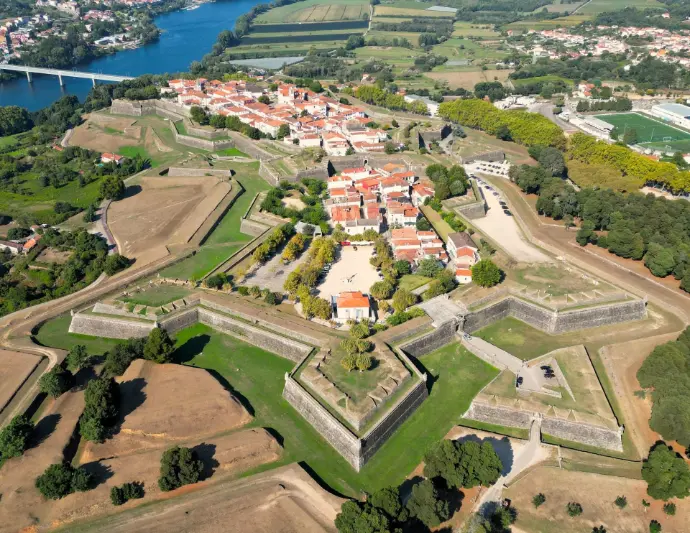
Heritage of the Fortress
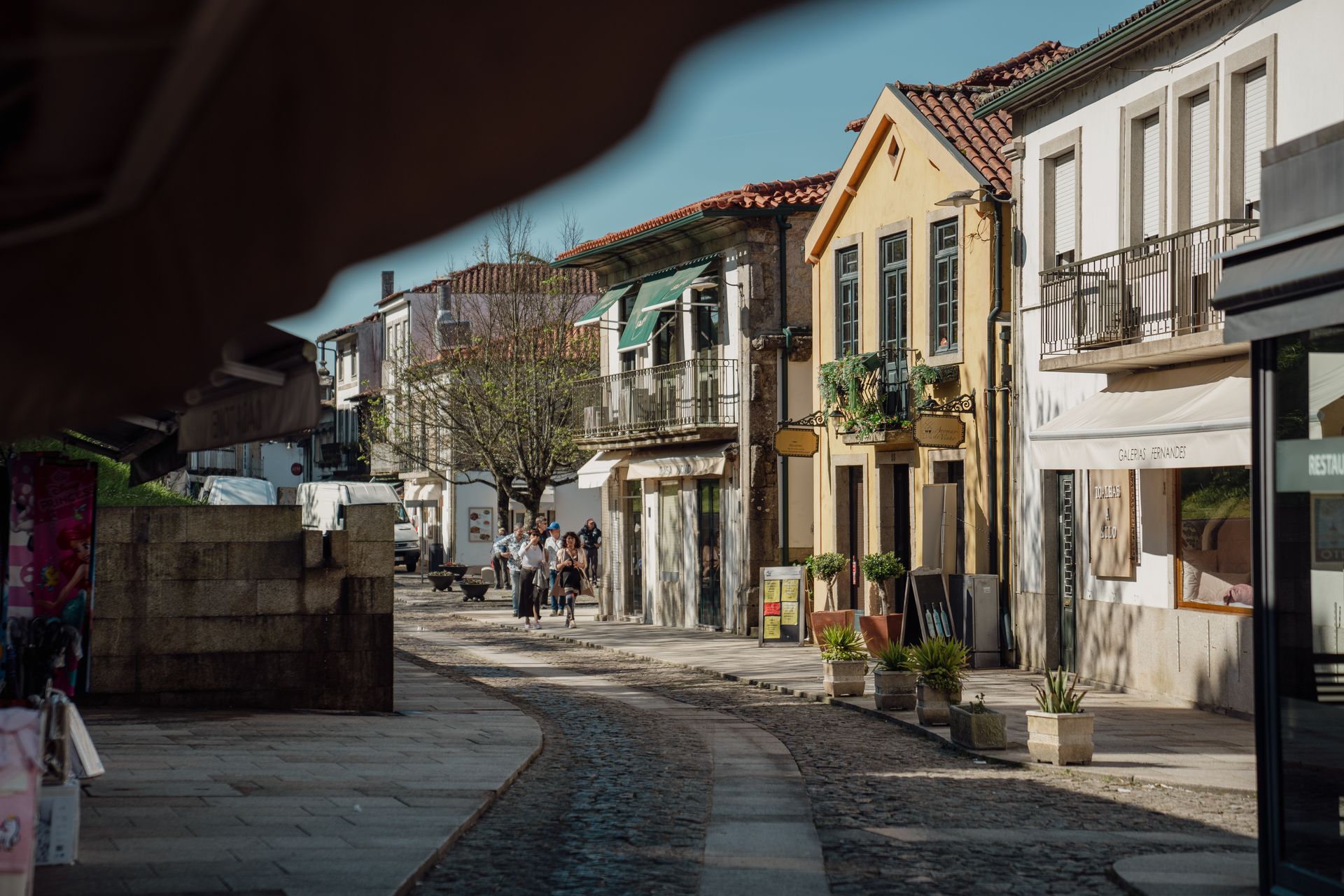
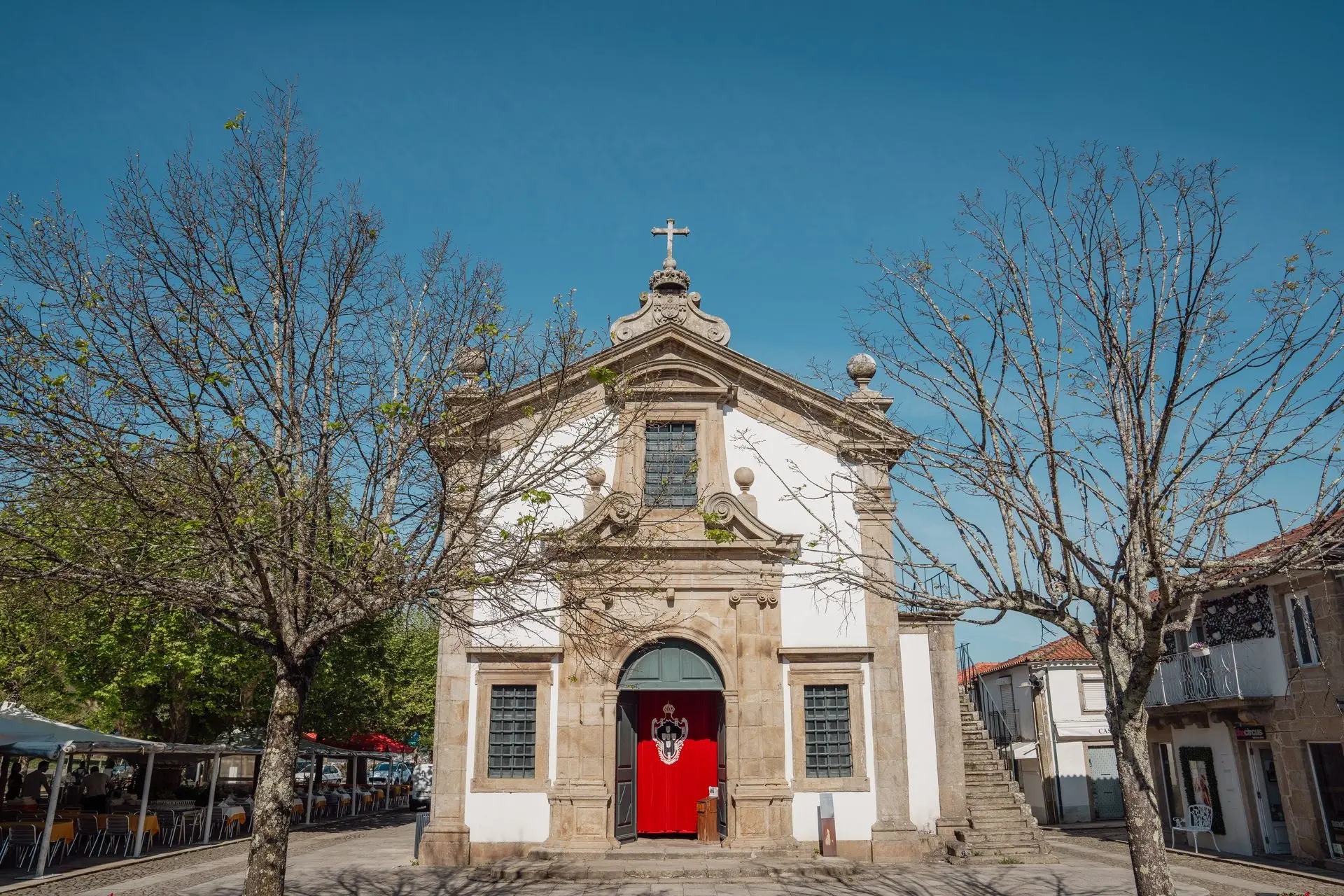
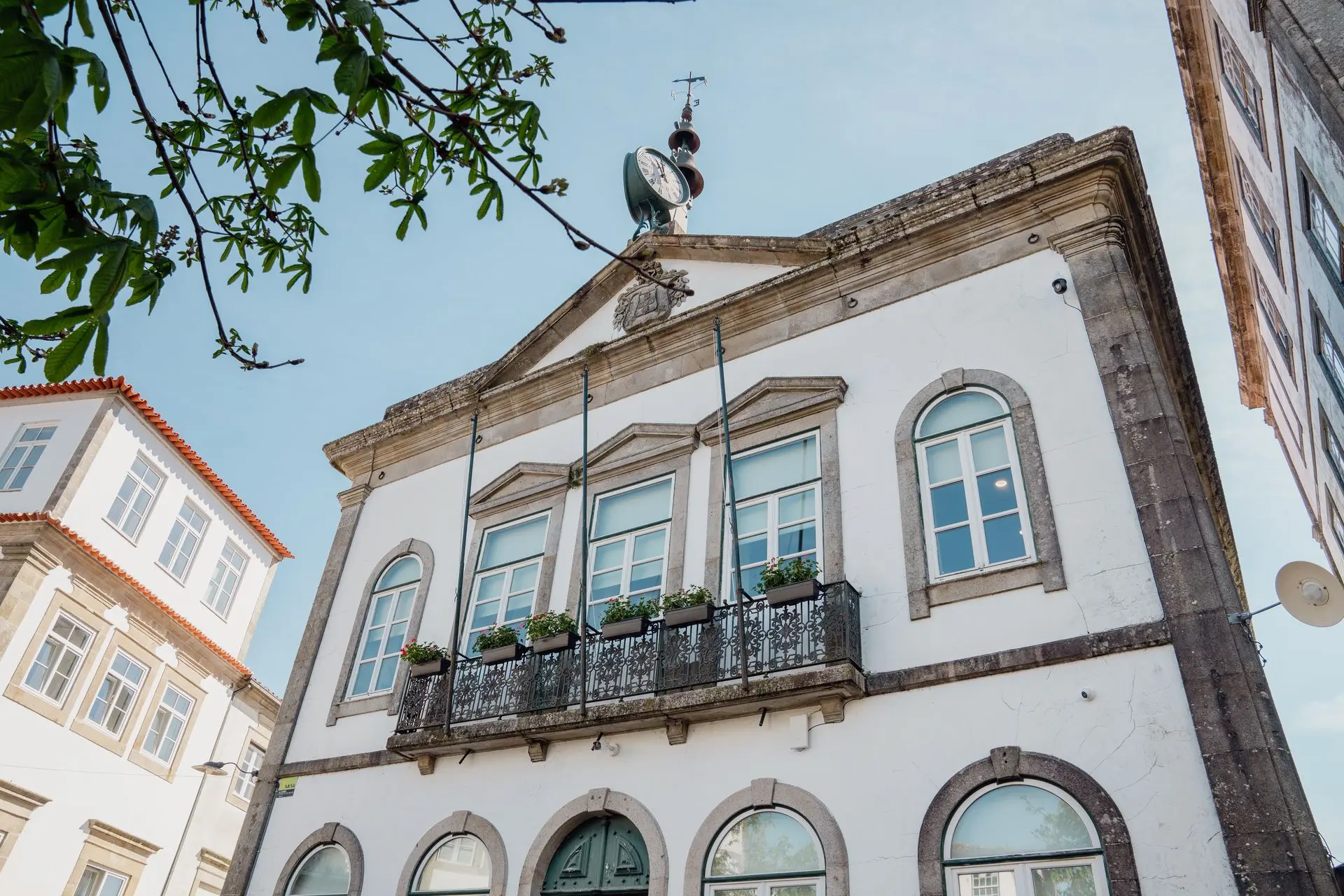
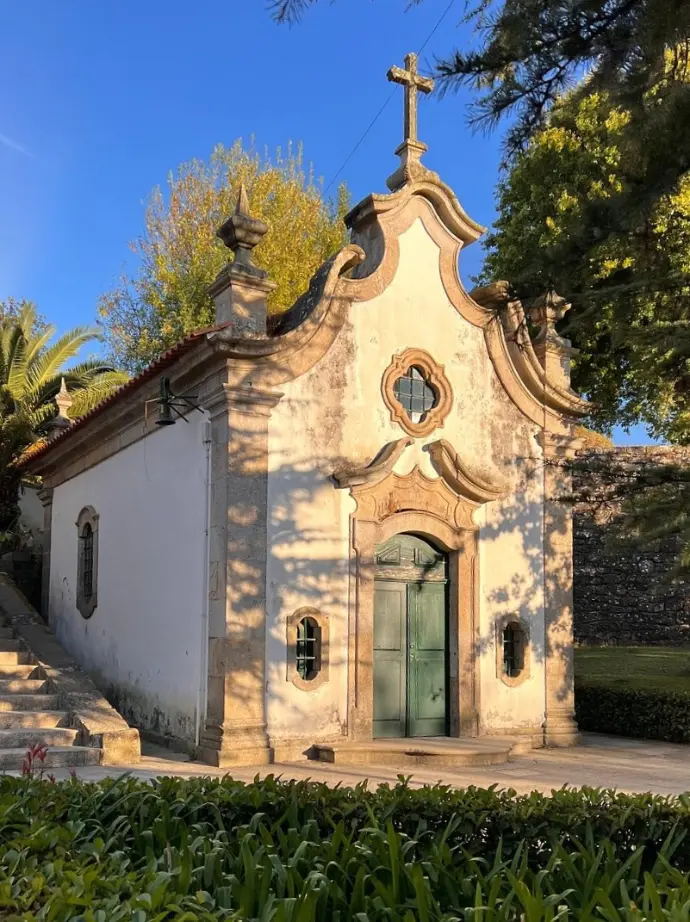
CAPELA DE NOSSO SENHOR DO ENCONTRO
With a simple layout and elegant lines, this chapel stands out for the harmonious sobriety of its façade, reflecting the deep spirituality associated with it. A true symbol of local religious devotion, it is a place of reflection that invites contemplation and faith.
An essential stop for those who value sacred heritage and the authenticity of Valença’s religious expressions.
CENTRO MUSEOLÓGICO DA GUERRA DA RESTAURAÇÃO / CENTRO DE INTERPRETAÇÕES DOS CASTELOS E FORTALEZAS
This is one of the most emblematic military buildings in the Fortress of Valença, designed to be bomb-proof in order to withstand conflict and safely preserve ammunition.
Its robustness and strategic architecture reflect the military importance the city has always held. Today, it houses the Museum Centre of the Restoration War, a space that invites visitors to discover the region’s military history, with a special focus on Valença’s crucial role during the 17th-century Portuguese-Spanish conflicts.
The building is composed of two rectangular rooms, surrounded by a high defensive wall. Inside lies Lieutenant General João Victória Mirrón de Sabione, a Swiss officer hired by Portugal to reinforce the Fortress’s artillery — a central figure in strengthening Valença’s defensive capabilities.
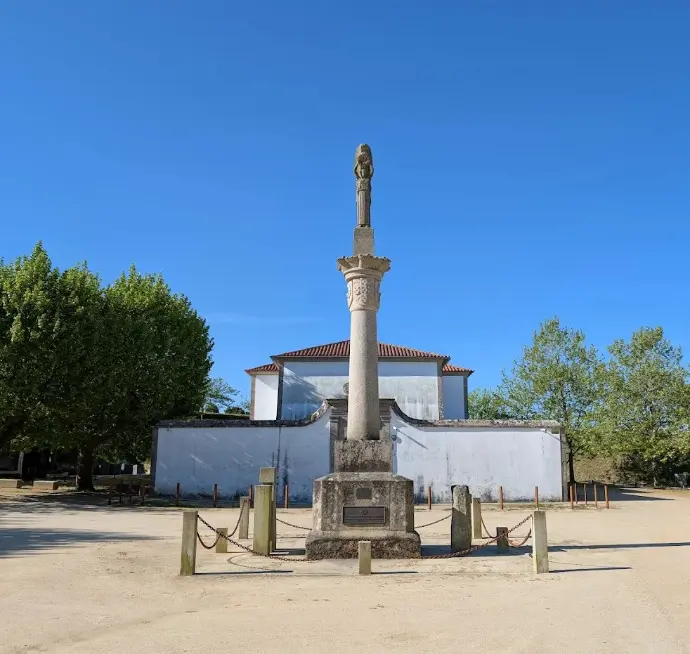
MONUMENTO AOS COMBATENTES DA GRANDE GUERRA DE VALENÇA
This monument pays tribute to Portugal’s participation in the First World War, standing out for its symbolic and rare representation of the human figure and the winged goddess of Victory, Nike, who crowns the composition with a laurel wreath.
The structure rests on a quadrangular base, rising into a smooth column with a capital decorated with shields, culminating in a plinth on which the figure of Victory stands. The work combines revivalist neoclassical elements with marked Art Deco influences, especially visible in the stylisation of the female figure and her wings.
The capital displays the coat of arms of Portugal, flanked by a star and crescent moons, while the abacus is sculpted as a wall with towers, evoking the fortress and national resistance. An imposing and symbolic tribute to the memory of the combatants, combining art, patriotism and solemnity.
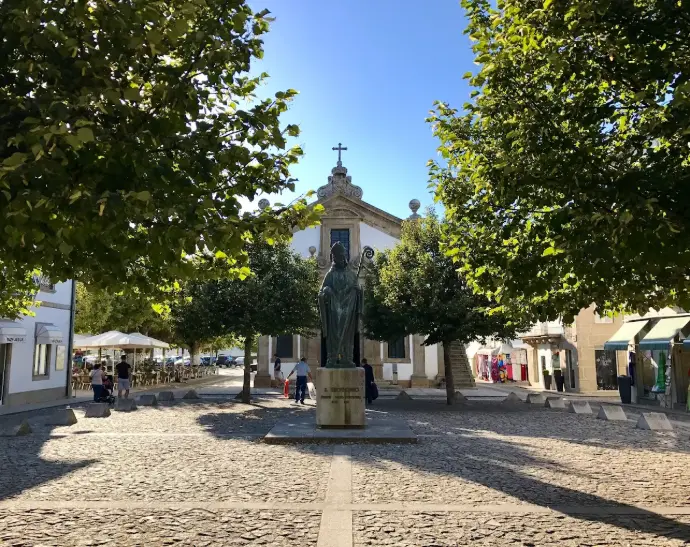
ESTÁTUA S. TEOTÓNIO
This 20th-century sculpture pays tribute to Saint Teotónio, a major figure in Portuguese spirituality and a symbol of national identity. Born in 1082 in the parish of Ganfei, in Valença, and having died in Coimbra on 18 February 1162, he was the first Portuguese person to be canonised, just one year after his death, by Pope Alexander III.
Saint Teotónio stood out as a defender of captive Christians, having interceded, according to tradition, for the release of around one thousand Mozarabic men, women and children captured during raids into Andalusia. His actions and spiritual influence earned him recognition as the patron saint of captives.
Confessor and adviser to D. Afonso Henriques, he was deeply respected by the founding king of Portugal, who asked for his blessings and kissed his hand as a sign of devotion. This sculpture celebrates not only the man of faith, but also an inspirer of Portuguese nationhood, whose life and legacy continue to be remembered as examples of virtue, courage and devotion.
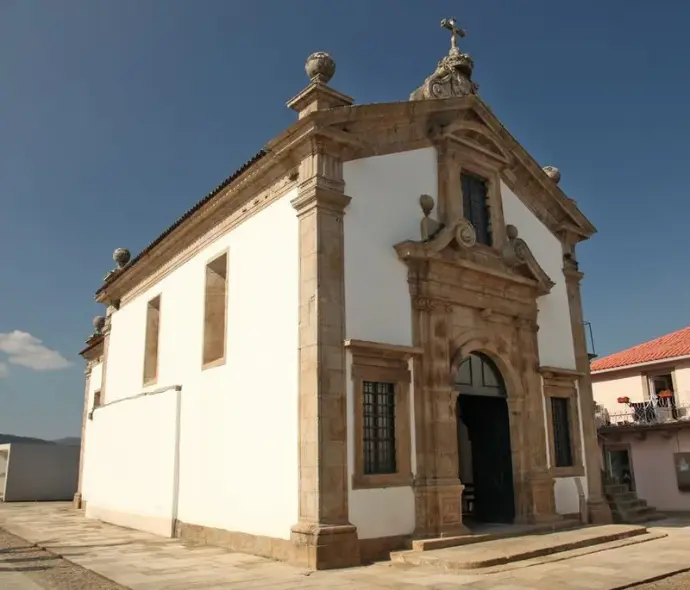
CAPELA DO BOM JESUS
Dating from the 17th century, this chapel harmoniously combines Baroque and neoclassical elements, making it a notable example of religious architecture from that period.
Its history is deeply linked to the military life of the Fortress, having served as a place of devotion and reflection for soldiers.
Of particular note is the image of Our Lady of Mount Carmel, venerated as the “patroness of the military”, which traditionally accompanied the army during its campaigns.
A place where spirituality and history meet in an atmosphere of peace and contemplation.
CENTRO DE INTERPRETAÇÃO DA FORTALEZA
Designed by the architect Eduardo Souto Moura — awarded the Pritzker Prize in 2011 — this building is a contemporary landmark integrated into the heart of the Fortress of Valença. Inaugurated in 2009, it was created as part of the Public Spaces Regeneration Project for the Fortress, enhancing the dialogue between historical heritage and modern architecture.
More than a support point, this space welcomes visitors and presents the history of the fortification, offering an informed perspective on the strategic, military and cultural importance of Valença over the centuries.
It is a work that combines functionality and elegance in the service of collective memory.
PARQUE INFANTIL - FORTALEZA DOS PEQUENINOS
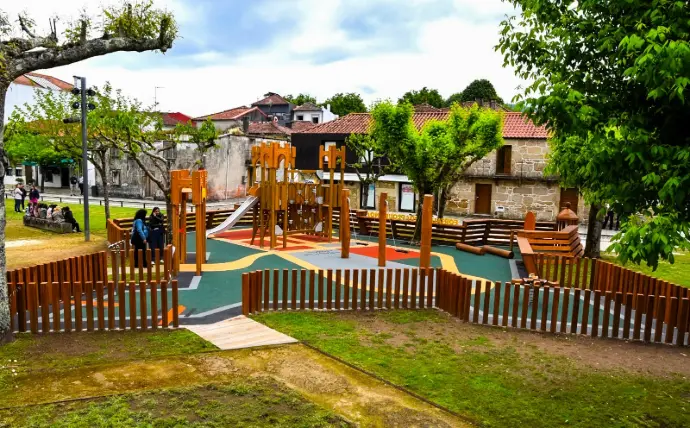
This play area was carefully designed to offer children moments of fun, integrating harmoniously into the historic centre of the Fortress of Valença. Inspired by the military imagery that shapes the city’s identity, the playground creatively recreates symbolic elements of defensive architecture.
Surrounded by a wooden fence that evokes the historic walls, the space features an entrance portico and small sentry boxes, reinforcing the themed atmosphere and stimulating children’s imagination.
It is equipped with a variety of structures that encourage movement and symbolic play, including a climbing net, slides, a suspension bridge, a fireman’s pole, a climbing wall, a double log swing called the “King’s Armchair”, a wooden spring rider, a monocular viewer and the classic hopscotch game. A place where play meets history, designed to captivate children and delight families.
MUSEU DO BOMBEIRO
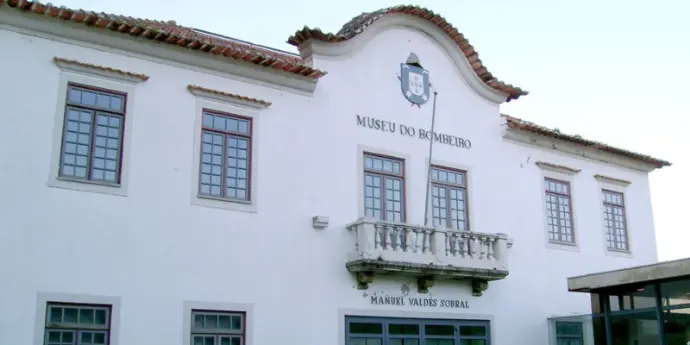
Installed in the former “Military Inn” of the Fortress, the Firefighters’ Museum is a museum space dedicated to preserving and sharing the memory of the soldiers of peace. Since 1994, it has brought together one of the richest and most diverse collections connected to firefighting activity, with around 4,000 pieces on display.
The collection includes equipment, uniforms, miniature vehicles, medals, documents and historical objects from the Valença Volunteer Fire Brigade, as well as items from various parts of the world. A space that pays tribute to courage, public service and solidarity, inviting visitors to discover the evolution of this noble mission over time.
MARCO MILIÁRIO PELOURINHO DE VALENÇA
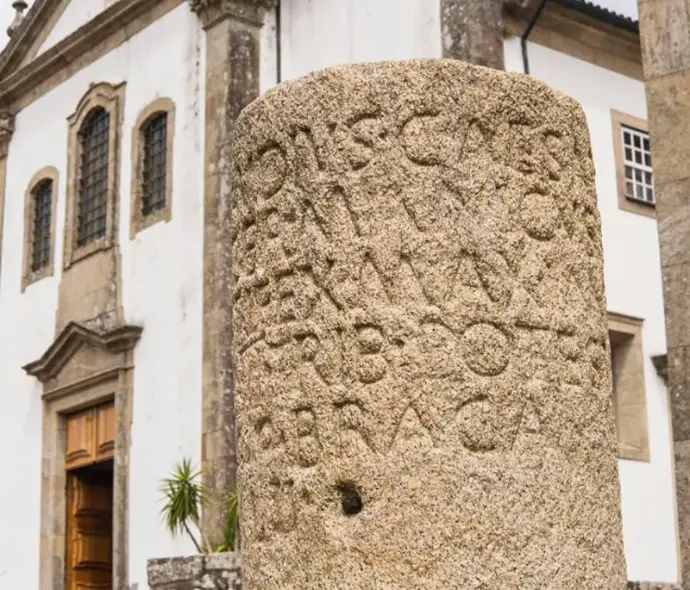
The Roman milestone, dating from 43 AD, was erected by order of Emperor Claudius. It marks the distance of 42 miles between Braga and Tui and was built during improvement works on Route IV of the Antonine Itinerary. In 1680, the milestone was moved to its current location and adapted to serve as a pillory.
CENTRO DE INTERPRETAÇÃO DAS FORTALEZAS ABALUARTADAS DA RAIA
The Interpretation Centre is a space dedicated to enhancing, studying and sharing the vast military heritage that characterises the border line between Portugal and Spain. Located in a region of great strategic and historical importance, it invites visitors to explore the legacy of bastioned fortresses — complex defensive systems built between the 17th and 19th centuries in contexts of conflict and territorial affirmation.
Through interactive exhibitions, multimedia content and educational resources, the Centre offers a true journey through time, helping visitors understand the evolution of military architecture, the role of border garrisons and the impact of wars on the lives of border communities.
More than a space of memory, the Interpretation Centre presents itself as a meeting point for understanding the borderlands as a living territory of resistance and coexistence. At the same time, it reinforces the importance of cross-border cooperation in preserving and enhancing a shared heritage.
CAPELA DA MISERICÓRDIA E IGREJA SANTA MARIA DOS ANJOS
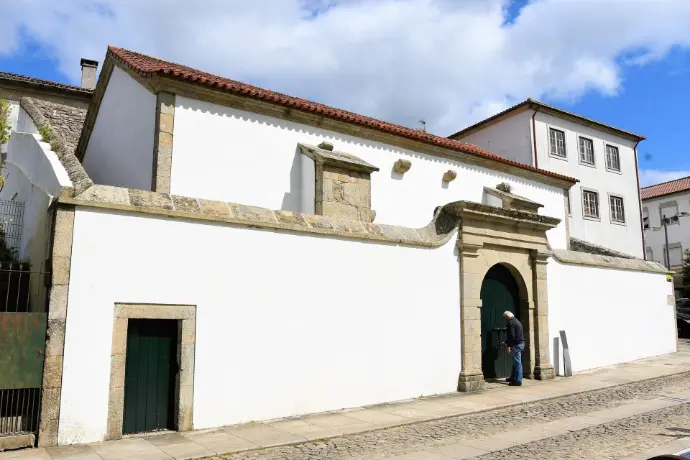
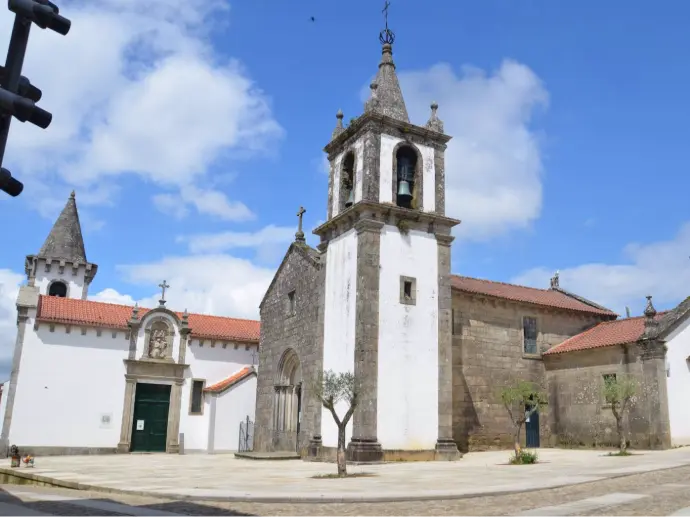
The Mother Church dates back to the 13th century and to the foundation of Contrasta by D. Paio Gonçalves Carramondo. Inside, it preserves 5 polychrome carved altarpieces in neoclassical and Baroque styles and, in the chancel, another polychrome carved neoclassical altarpiece. The adjoining chapel, dating from 1277, features remarkable architectural elements and the inscription: “This chapel was commissioned by Afonso Pérez and his wife Maria Rodrigues, in the year 1315”.
Built in 1558, in the 16th century, this chapel is located at the northern end of the Fortress. It is a religious building that combines elements of Baroque and neoclassical styles.
It has a longitudinal layout, composed of a single nave, and underwent remodelling in the 18th century.
Its construction involved the expansion of the area over the churchyard of the Church of Santa Maria dos Anjos, where an oratory had previously existed.
IGREJA DE SANTO ESTEVÃO
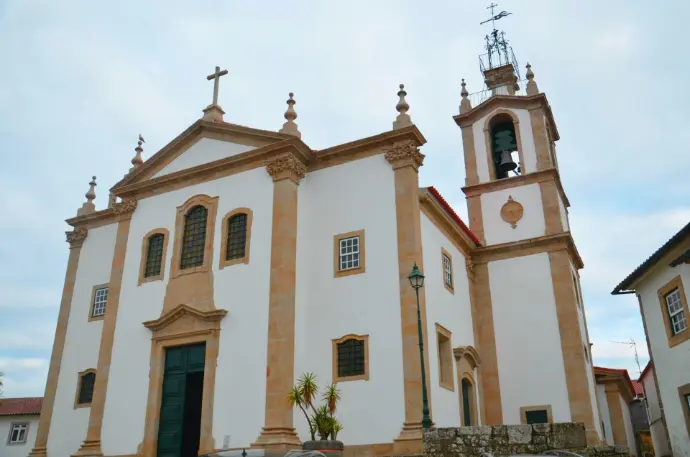
Built in 1283, in the 13th century, by order of D. Dinis, the Romanesque church was established as a temple under his patronage. Later, in 1398, by order of D. João Garcia Manrique, Archbishop of Santiago de Compostela, it became the seat of the Collegiate Church of Santo Estêvão and, subsequently, of the Bishopric of Ceuta.
The building was reconstructed in neoclassical style in 1792, while still preserving Romanesque elements in its structure.
Inside, several artistic treasures stand out: the episcopal chair in Gothic-Mudéjar style, dating from the 15th century; the choir stalls, topped by 16th-century Mannerist panels illustrating the life of Santo Estêvão; and a painting from the same century depicting Nossa Senhora do Leite.
Find out more about tourist attractions, routes and trails in Valença
Visit us on the official Valença Tourism website.